

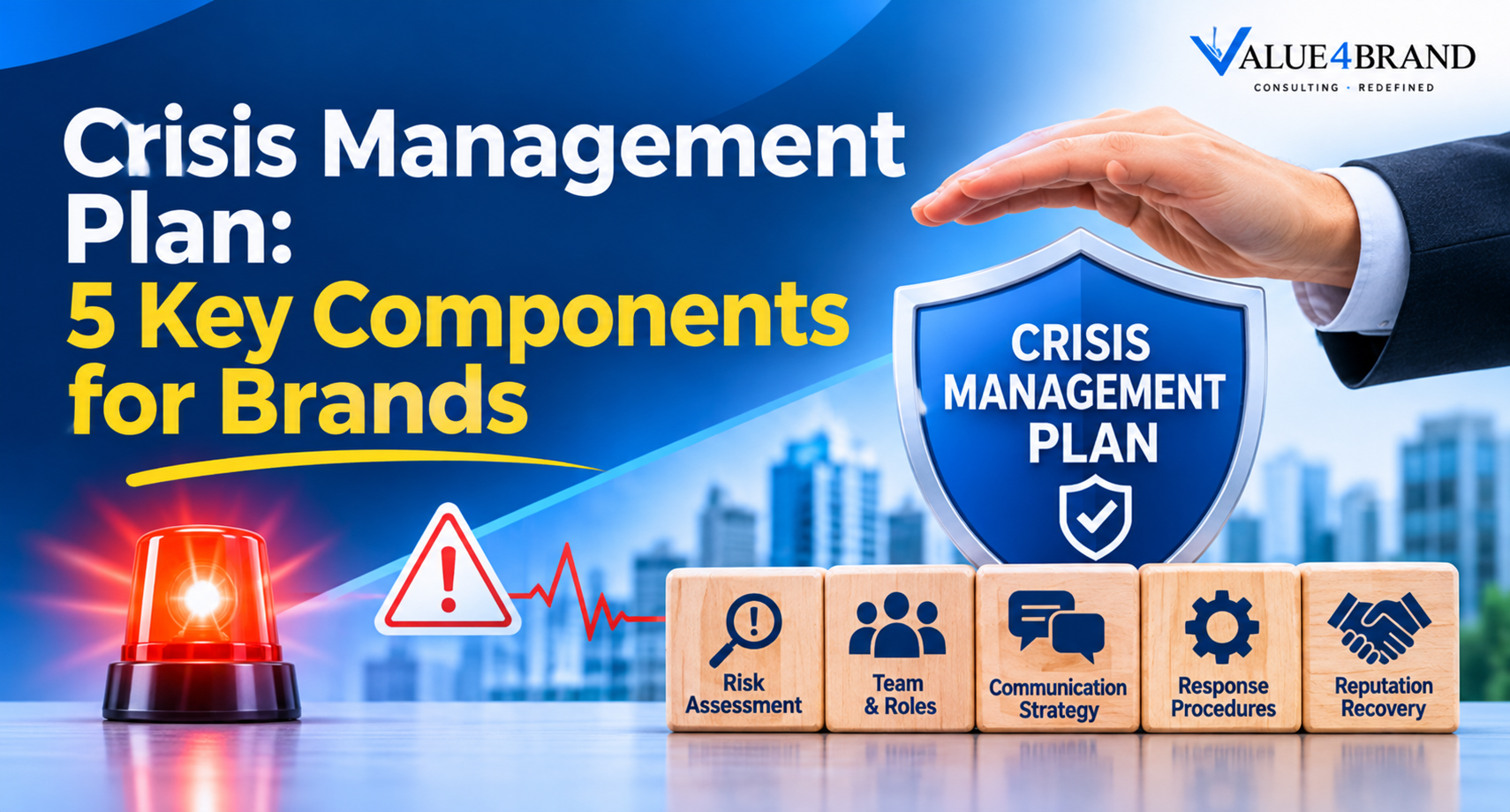
An effective crisis management plan has key components like measures for risk assessment, a team with well-defined responsibilities, communication and response strategies, etc. These components enable a business to handle this unexpected situation while ensuring the continuity of its operations and protecting its online reputation. Since such an emergency can quickly impact customers’ trust and public perception, having the plan ready is important for every brand. Through professional crisis management services in India, it can be prepared for a stronger impact. Such a strategy can help in responding timely, controlling crises effectively, and restoring reputation quickly.

Reach out to us anytime — we’re just a message away !!
We’d love to hear from you! Whether you have a question, feedback, or just want to say hello, our team is here to help.
Schedule a CallWhat is a Crisis Management Plan?
A crisis management plan is a strategic approach for a business to prepare for and take charge of unusual events that affect its reputation and hinder its operations. It lays out the steps to follow when a crisis occurs.
- Such a strategy defines a business team’s responsibilities during the situation.
- Making use of crisis management services in India, it helps in restoring operations.
- It gives direction to communication and responses.
- As a result, businesses can control difficult situations to limit their impact.
Why is a Crisis Management Plan Important for a Brand?
For a brand, a plan for crisis management is important as it helps in retaining its reputation and public trust. These take years to build and one crisis alone can destroy them, says Value4Brand. The crisis management agency in Delhi adds that by outlining communication strategies prior, brands can avert further scandals and social media backlash.
For other concerning reasons as well, this plan is significant for businesses:
- It protects business revenue in the long term.
- For mitigating backlash online, it plays a key role.
- It maintains the confidence of stakeholders amidst crises.
- Internally as well, it limits confusion among employees by informing them what to share publicly.
What Makes a Business Crisis Management Plan Effective?
There are 5 components that make a crisis management plan for a business effective and quick to implement. It has risk identification measures, a specialized team planned, communication strategies outlined, and others. Through these, the overall emergency can be strongly addressed.
1. Measures to Identify and Assess Risk
A plan to manage a crisis should have measures to identify potential risks that could impact the business operations and online presence of a brand. The crisis management strategy should assess their possibilities and impact on the company as well as prioritise threats accordingly.
2. Properly Defined Roles and Responsibilities
The plan to regulate crises for brands should have key components like a specific team with responsibilities assigned to each member. The members should be clear about their roles to avoid confusion when the situation actually occurs. This can ensure that the team knows what actions it has to implement.
3. Crisis Communication Strategy
An effective plan for handling business crises should include how it will communicate with customers, employees, social media users, and other stakeholders. A corporate crisis management plan, in particular, should outline communication channels and measures to send timely and accurate updates.
4. Action and Response Procedures
A plan to control and manage crises should comprise steps for a brand to act in different types of situations, like negative publicity, customer complaints, an employee’s misconduct, etc. These procedures can enable it to make informed decisions, address concerns quickly, and reduce their effects on business activities.
5. Reputation Recovery Measures
For brands, crisis handling plans should have components like services that focus on restoring their reputation. These crisis management services in India can assist in eliminating the cause of the situation and re-establishing the online presence of businesses over a period of time.
Strengthen Your Crisis Management Strategy with Value4Brand
Value4Brand is the top agency for brand crisis management services in India. It provides specialized solutions to handle online reputation during emergencies, thereby helping businesses to protect their credibility. This company’s approach has the key components controlling such situations actively and restoring reputation quickly.
Expertise in Handling Online Crisis and After-Effects
The crisis management agency in Delhi, Value4Brand expertly monitors online conversations. It detects possible threats to business reputation. Its team of specialists utilize social listening and monitoring to track mentions, customers’ sentiments, and negative discussions over various platforms. Thus, online crises are controlled and their effects afterward are managed.
- This agency promotes positive content for brands to address bad search results.
- It monitors unfavorable discussions and controls public backlash online.
- After tracking customers’ reviews, it responds to these professionally.
- It identifies negative threads online and implements crisis communication services.
- Importantly, this agency has experience in handling such situations for brands across various industries.
For brands to protect their reputation amidst crises and control their impact, Value4Brand is the agency to rely on.
In Brief
Situations that affect brand reputation can arise even unexpectedly. A crisis management plan is, therefore, important to control the situation. Its ongoing and post-occurrence effects can then be managed. Through professional services for its management, the plan can gain more effectiveness to mitigate risks to the brand’s online presence.
FAQs
Q1. Why is risk assessment important in a crisis management plan?
Risk assessment is important in a crisis handling plan because it helps in identifying potential threats. It can evaluate their possible impact as well. Consequently, it allows a business to prioritise these risks and prepare better when responding to the situation.
Q2. What roles and responsibilities should a crisis management team have?
As part of the strategy, a crisis management team should have responsibilities for decision-making in the situation. It should understand communication and risk control procedures. Also, it should responsibly carry out reputation recovery.
Q3. Why should a crisis management plan have clear response procedures?
Clear response procedures can make a crisis management plan suitable for guiding employees on what actions they should take when different situations occur. This can reduce uncertain action and ensure faster decisions to control their impact.
Q4. What should a crisis communication strategy include?
A crisis communication strategy should include brand teams to respond to the situation, communication channels through which measures will be carried out, the type of responses to share, etc.
Q5. How do reputation recovery measures support crisis management?
Measures for reputation recovery support crisis management by addressing negative publicity. They can look after buyers’ concerns and build their trust again. Also, they can restore the positive image of a brand after the crisis.
Q6. What can make a crisis management plan ineffective?
Components like unclear team responsibilities and poor communication by a brand can make the crisis management plan less effective. In addition to this, incomplete or improper risk assessments and delayed responses to customers can weaken the strategy.
Q7. How do crisis management services in India help make a plan effective?
Professional crisis management services in India can make a plan more effective by detecting risks, monitoring online discussions, preparing response strategies, handling negative publicity, as well as carrying out reputation recovery measures.
Q8. Does regular testing make a crisis management plan stronger?
Yes, regular testing can make a plan for managing crises stronger. This can help in finding any gaps in response measures and communication strategies. These gaps can then be reduced to make the strategy’s impact better.