

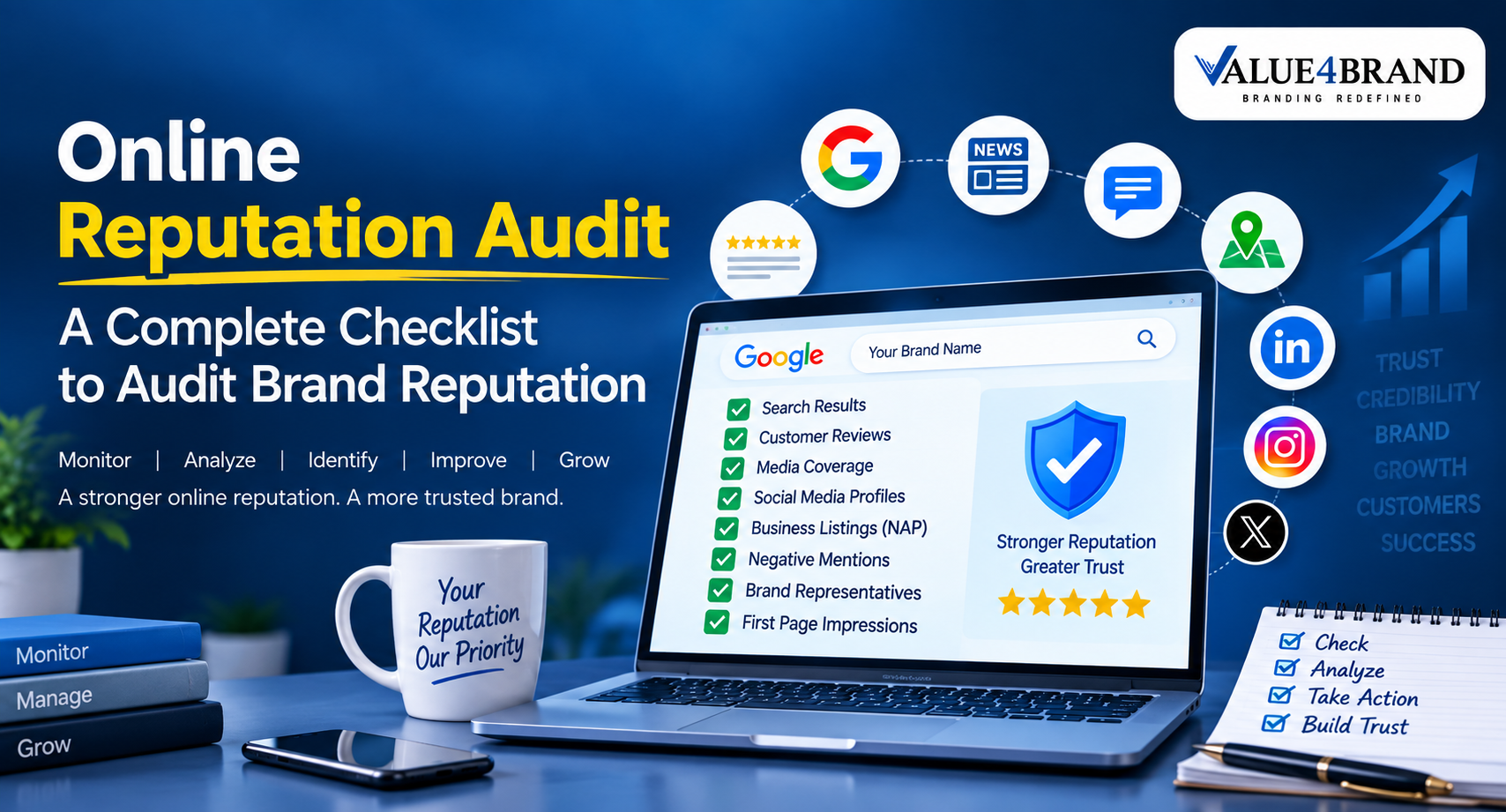
An online reputation audit can be rightly conducted when certain aspects of a brand’s online presence are checked. These include mentions, media coverage, customer feedback, and information consistency. These elements matter as they shape how buyers perceive and trust a business. Besides, knowing what to examine can enable the identification of reputation risks, inaccurate or negative content, and areas that require attention before they affect customer decisions.

Reach out to us anytime — we’re just a message away !!
We’d love to hear from you! Whether you have a question, feedback, or just want to say hello, our team is here to help.
Schedule a CallWhat is an Online Reputation Audit?
An online reputation audit means a thorough review of how a business appears in Google Search. It involves going through search results, business listings, customer reviews, website content, as well as public mentions. This enables understanding what online users perceive and say about it.
Reputation Audit Checklist: What to Look for in Google Search?
A checklist for a reputation audit can help understand how a brand’s online presence on Google may influence customer trust and decisions. News coverage, business mentions, and other checks can uncover inaccuracies, concerns, mentions, etc., that may impact brand perception.
1. People Also Ask or PAA
While conducting a brand reputation audit, review the People Also Ask section. Go through the appearing questions when users look for a business. Identify concerns regarding product quality, pricing, issues, overall experiences, etc.
2. Media Coverage or News
The audit should include searching the “company name + news”. Likewise, “complaints”, “reviews”, or “awards” should be searched. Skim through the various types of coverage discovered to detect favorable or unfavorable information.
3. Customer Reviews
Check the feedback posted by buyers about a brand on Google during the reputation audit. Study frequent issues, recurring concerns, and positive experiences. Tend to the overall feedback, especially the most recent one, to assess their perceptions.
4. NAP Consistency
The reputation audit checklist should essentially comprise screening business name, address, and phone number (NAP) consistency on the search engine. Besides, they should be checked across its official website, online directories, and Google Maps.
5. Search Results Linked to a Brand Name
When a brand’s online presence is audited, its name should be searched on Google. Then the initial result pages should be analysed. Consider what consumers, leads, and the public possibly see first. Identify every page that is negative, misleading, positive, or outdated prior to limiting its influence.
6. Unresolved or Unanswered Reviews
It is important to check Google reviews and spot those that are unanswered or unresolved. They can carry genuine customer concerns and feedback. At times, they may even violate Google policies. Despite that, once they have been found, responding to or reporting them is vital to restrict any negative impact on business reputation.
7. Social Media Profile Rankings
As part of online reputation checks, a critical thing to review is which social media profiles rank in the results for a particular business. Ensure that the active accounts rank well and present correct information.
8. Google Business Profile Information
Alongside determining NAP consistency, assessing whether the Google Business Profile details are complete yet accurate is important. Audit the brand presence by evaluating the correct business website, category, operating hours, etc.
9. Nature of Business Responses
While checking the type of customer reviews is essential, the nature of responses to these should be analysed too. See to it that they are professionally and positively responded to, even when they are not favorable. This will help make the business look responsive, concerned, and professional.
10. Google Images
The digital reputation audit should involve searching for a business name and Google Images relating to it. Inspect these pictures to observe whether its logo, store photographs, product images, employee pictures, and others are rightly represented.
11. Negative Results in Searches
A company should audit its digital reputation by finding negative articles, forum discussions, complaints, etc., appearing at the top on Google. Detect whether they are recent, relevant, or false.
12. Positive Search Results
A reputation audit should also focus on positive coverage through articles, testimonials, and achievements on Google. Depending on how prominent the results are, brand credibility can be impacted.
13. Search Results for Representatives
As an online reputation audit is carried out, the main representatives of a company should be checked on Google. The names of executives, founders, directors, etc., can hint at how positive or less favorable its digital presence is.
14. First-Page Impressions
Importantly, study the complete first page of Google after looking for a business on it. Determine the type of impression formed when it is fully analysed to understand whether credibility, transparency, and professionalism are reflected.
15. Autocomplete Suggestions for a Brand
The audit should comprise searching the brand name on Google and paying attention to autocomplete suggestions. Terms like “fraud”, “complaints”, and “scam” may not be as favorable as “reviews” or “quality”.
Also Read: How an ORM Company in India Helps Brands Build Digital Trust
Conducting Online Reputation Audit with Value4Brand
Value4Brand is a trusted online reputation management company in India that conducts audits to assess brand presence. It helps businesses find out their current standing on Google, customer issues, and public perceptions. Its audit approach includes offering meaningful insights into reputation-related risks, positive aspects, and improvement areas.
- Through reputation management audits, this company:
- Identifies emerging/existing customer concerns
- Finds misleading or bad results
- Develops strategies that limit their effects
- Strategically addresses customer concerns
- With a team experienced in these audits, it has the expertise needed to evaluate complex reputation concerns.
Connect with Value4Brand for in-depth reputation audits that reveal potential risks and build a stronger digital presence on Google.
Conclusion
Conducting an online reputation audit is important for businesses to assess and manage their presence. By knowing customer concerns early and addressing them strategically, they can strengthen their credibility, maintain customer confidence, and facilitate a better online presence in the long term.
Also Read: How AI Search can Impact Your Brand Reputation
FAQs
Q1. Why is a brand reputation audit important?
A brand reputation audit is important for identifying public perceptions, negative mentions, and customer concerns. It can also assist in addressing reputation risks before they affect customers’ trust and their decisions.
Q2. How often should you conduct a reputation audit?
Ideally, a brand should conduct a reputation audit every quarter to actively look for emerging risks, crises, and, most importantly, negative mentions.
Q3. What is a reputation audit checklist?
A reputation audit checklist is a list of areas a business should evaluate to assess its digital presence as well as the associated risks.
Q4. How long does a reputation audit typically take?
Typically, a reputation audit can take a few hours to several days, based on a specific brand’s online presence, volume of searches, and mentions across platforms.
Q5. What tools can I use to audit brand reputation?
Tools like Google Alerts, Brand24, and Google Search Console can be used for auditing brand reputation.
Q6. Can a reputation audit identify gaps in brand reputation?
Yes, a reputation audit can spot gaps by focusing on negative mentions, inaccurate information, areas for improvement, and buyers’ concerns.
Q7. How to professionally conduct a reputation management audit?
To professionally conduct a reputation audit, rely on a trusted ORM company with expertise in monitoring online mentions, customer sentiment, search results, etc.
Q8. What to do after auditing business reputation online?
After auditing business reputation, the identified concerns should be addressed and gaps should be filled in to ensure a positive presence online.